Some of the links in this article may be affiliate links. If you make a purchase through these links, we may earn a small commission at no extra cost to you. Thank you.
A geocaching activity guide is basically a curated trip plan — it bundles specific caches, dates, and destinations into one structured adventure. It’s not just coordinates on a screen. Think of it more like a travel journal that connects each find to a real story, whether that’s local history, landmarks, or forgotten trails. I think that’s what separates a guide from random hunting. Stick around and there’s a lot more worth knowing.
Thank you for reading this post, don't forget to subscribe!
What Is a Geocaching Activity Guide?
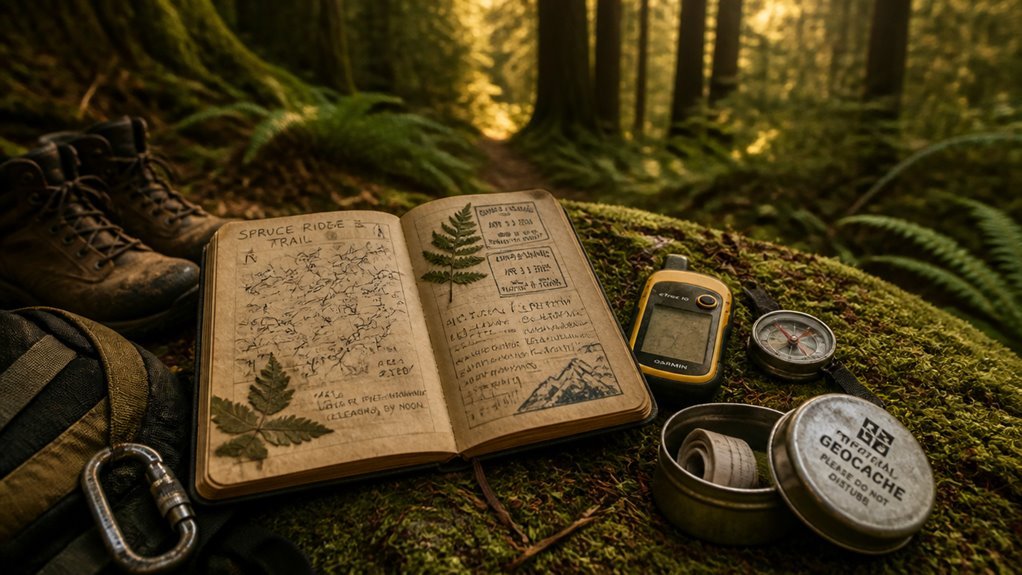
A geocaching activity guide is, at its core, a curated roadmap — it pulls together a set of caches, destinations, and dates into something that actually feels like a trip worth planning. It’s not just a list. Think of it more like a well-designed travel journal that hasn’t been written yet. I think what makes these guides genuinely useful is how they weave storytelling into each location, so you’re not just hunting — you’re understanding *why* you’re there. They also touch on exploration ethics, which, honestly, more cachers should prioritize. Cache maintenance matters too; a good guide helps you recognize what a well-kept cache looks like versus one that’s been neglected. Maybe that sounds minor, but it shapes the whole experience.
How These Guides Weave Local History Into Every Hunt
One thing I’ve come to appreciate about geocaching activity guides is how they turn an ordinary hunt into something that actually feels like a history lesson — without the boring parts. Each cache you track down isn’t just a hidden container; it’s a doorway into local lore, whether that’s an old homestead, a forgotten trail, or a story tied to someone who shaped the region. I think that’s what makes guides like the Captain John Smith GeoTour so compelling — they don’t just point you somewhere, they give you a reason to care about where you’re standing.
Caches Reveal Hidden Histories
Have you ever stumbled onto a piece of history so hidden that you almost walked right past it? That’s exactly what geocaching does — it pulls you toward historic routes and hidden legends you’d never discover otherwise. Each cache logbook isn’t just a sign-in sheet; it’s actually a tiny archive. I think that’s what makes this activity so different from a regular hike.
Well, every inscription, every clue left behind, tells a story tied to the land. Maybe it’s an old homestead, maybe a forgotten trail. In my experience, reading those cache notes feels like flipping through someone’s personal diary — layered, intimate, real. Guides like those covering Rim Country connect these discoveries into something bigger, a living, breathing map of local heritage.
Landmarks Guide Local Exploration
What I love most, though, is how these guides don’t just point you toward a cache — they actually root you in a place. It’s like reading a novel, but instead of science fiction or some unrelated topic, you’re living the actual story of where you’re standing. In Georgia, puzzles reveal caches near prehistoric Native American settlements. Duluth’s 25-cache series walks you through historic landmarks across roughly 10 square miles. Arizona’s Rim Country guides you through Tonto National Forest, weaving real stories into every stop. Arabia Mountain spotlights natural features that, honestly, I think most people would walk right past. These guides don’t just lead — they teach. Maybe that’s what makes geocaching feel less like a game and more like genuinely knowing a place.
Best GeoTours for Family Adventure Travel
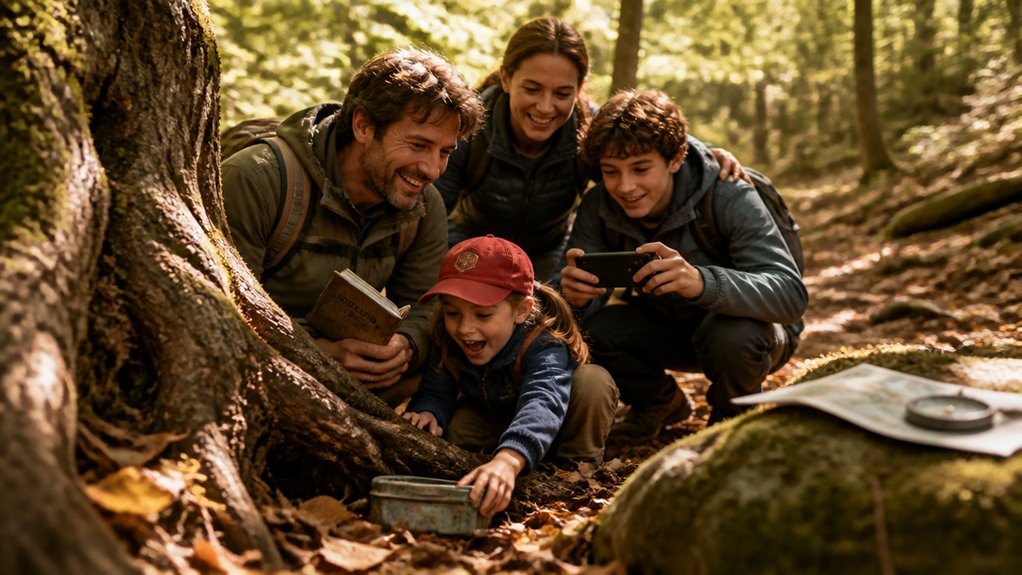
GeoTours are, honestly, one of the best ways to turn a family trip into something genuinely memorable — like a treasure hunt with a built-in history lesson. Geocaching logistics don’t have to stress you out, and most tours fit reasonable travel budgets. Here are five worth exploring:
- Captain John Smith GeoTour – 54 caches through Chesapeake Bay history
- Operation Recreation – 69 Florida caches celebrating scenery and outdoor fun
- Dinosaur Train GeoTour – 107 educational caches kids actually love
- Cateran Trail GeoTour – 20 caches along a beautiful 15-mile Scottish route
- Minnesota Paul Bunyan GeoTour – 102 official caches on a rail-to-trail path
I think the Dinosaur Train tour is probably the strongest pick for younger kids. Each stop teaches something real. As they grow more confident, a complete night geocaching guide teaches essential techniques for exploring caches after dark.
Choosing a Geocaching Guide That Matches Your Skill Level
If you’re just getting started, I’d stick to caches rated 1.5 difficulty or below — they’re forgiving, usually close to familiar spots, and honestly, a great way to build confidence without feeling overwhelmed. Think of matching your guide to your skill level like picking a hiking trail: you wouldn’t tackle a steep mountain on your first day out. As you get more comfortable, you can actually start layering in bigger caches, basic puzzles, and eventually multi-cache routes that stretch both your navigation skills and, well, your patience.
Beginner Cache Selection Tips
Choosing your first few caches well can honestly make or break your experience with geocaching. I think starting with a beginner cache removes a lot of frustration early on, especially if you’re bringing kids along. Kid-friendly options exist, and you just need to know what to look for.
Here’s what I’d actually recommend keeping in mind:
- Stick to difficulty ratings at or below 1.5 on the 1–5 scale
- Choose traditional caches, which are usually more straightforward
- Pick larger containers — they’re genuinely easier to spot and sign
- Match the distance to your group’s pace
- Bring a pen, water, and maybe a backup cache option
Well, preparation honestly works like a map itself — it guides everything else smoothly.
Matching Difficulty to Experience
How do you actually know when a cache is the right fit for your group? Well, I think the rating system tells you most of what you need. Start with beginner caches rated 1.5 or below — those are genuinely manageable for newcomers. It’s like learning to swim in the shallow end before jumping into open water.
Cache size matters too. Larger containers are easier for kids to spot, while micro caches demand patience and sharp eyes. Terrain ratings are just as important as difficulty, so don’t overlook them.
If your group grows more confident, premium accounts unlock harder puzzles and more complex terrain options. I’m not entirely sure every group needs that upgrade immediately, but it’s worth considering once the basics feel comfortable.
Upgrading Your Geocaching Skills
As your confidence grows, the way you approach geocaching really starts to shift — and that’s when picking the right guide for your skill level becomes genuinely important. Upgrading skills isn’t just about finding harder caches; it’s about smart difficulty alignment at every stage.
Here’s what I’d honestly suggest:
- Begin with traditional caches rated 1.5 or below
- Use the free Geocaching app to filter by difficulty
- Upgrade to Premium for access to puzzle and multi-cache adventures
- Ask local staff, like those at Christopher Creek Lodge, for trail tips
- Progress gradually — maybe tackle one new cache type per outing
I think of it like climbing stairs. You don’t skip steps. Each cache builds the skills you’ll genuinely need next.
How Families Can Pace a Full-Day Geocaching Itinerary
Planning a full-day geocaching itinerary with kids is honestly a little like planning a road trip — you need a solid route, but you’ve got to leave room for the unexpected detours. I think starting with easy caching near your lodging is the smartest move for kids safety and comfort. Short distances, maybe a 1–2 mile radius, keep energy levels manageable. Mix in at least one larger cache for trading — kids *love* that part — and a few micros for quick wins. Don’t forget the basics: pen, water, snacks, good shoes. Build in rest breaks between stops, and actually pause to explore nearby landmarks. Well, a well-paced day isn’t just about finding caches. It’s about the whole experience. Getting these details right is what first family geocaching trip planning really comes down to.
What to Pack for a Geocaching Activity Guide Adventure
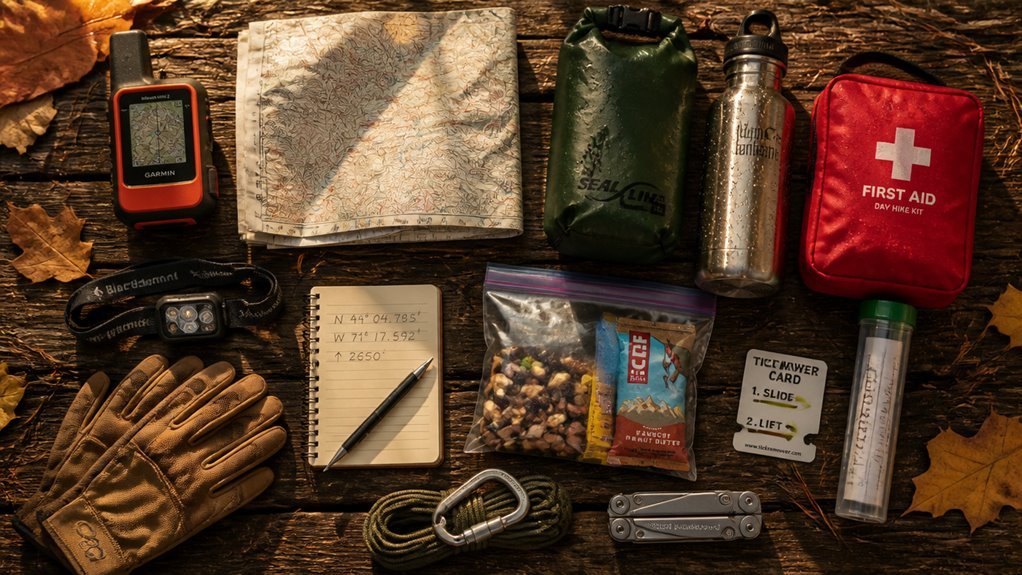
Once you’ve got your itinerary sorted, packing right is honestly what makes or breaks the day. Think of your pack like a toolkit — miss one thing, and the whole adventure feels off.
Packing right makes or breaks the day — miss one thing, and the whole adventure feels off.
Here are your packing essentials:
- Smartphone with a free geocaching app and a portable charger
- Pen and small trading trinkets for logbooks and cache swaps
- Water, snacks, and sun or rain protection
- Light jacket and sturdy shoes for uneven terrain
- A Leave No Trace mindset — tell someone your route, stay on trails, respect ethical boundaries
I think people underestimate how important those last two actually are. Replacing caches exactly as found isn’t optional, it’s the whole point. Pack smart, stay comfortable, and you’ll have a genuinely great time out there.
How to Log and Share Every Geocaching Find
Finding a geocache is only half the fun — logging it properly is what ties the whole experience together. Once you’ve found one, sign and date the physical logbook inside. That’s basic log etiquette, and honestly, skipping it feels like cheating yourself. Then replace everything exactly as you found it — good cache maintenance depends on every finder doing their part.
Online logging is where it gets fun, actually. Record your find on the app or website, add your coordinates, date, and maybe a note or two. I think sharing photos and comments — you know, telling the story of your hunt — is what really builds the community. If there’s a trading item, only swap it for something of similar value. Simple as that.
Frequently Asked Questions
Can Geocaching Activity Guides Be Used for Solo Adult Travelers?
Yes, I’d say they’re perfect for solo travel! You can follow your own pace while hunting hidden caches, creating your unique adventure story along the way as a fulfilling adult experience.
Are There Geocaching Guides Specifically Designed for Travelers With Disabilities?
Definitely, dedicated designs do exist! I’ve found that travel accessibility is thoughtfully woven into specialized guide design, helping you navigate geocaching adventures confidently, regardless of mobility, vision, or hearing challenges you might face.
Do Geocaching Guides Work Offline Without Internet or Cell Service?
Yes, many geocaching guides offer offline access, so you don’t need cell service. I’d recommend downloading offline maps and cache details beforehand, ensuring you’ll navigate trails successfully wherever your adventure takes you.
Can Children Earn Official Certificates or Badges Through Geocaching Guide Completions?
Yes, children can earn official badges through guide completion rewards! I’ll note that offline accessibility challenges may affect tracking progress, but Geocaching’s platform does recognize achievements with digital certificates once you’re reconnected.
Are Geocaching Activity Guides Available in Languages Other Than English?
Coincidentally, I’ve wondered the same thing! You’ll find geocaching activity guides offer various language options, making accessibility considerations a priority, so you’re likely to discover guides available beyond English for your adventures.