Some of the links in this article may be affiliate links. If you make a purchase through these links, we may earn a small commission at no extra cost to you. Thank you.
The hardest geocache to find isn’t just buried deep in a forest. It might be bolted to a cliff face two hundred feet above the ground, submerged thirty feet underwater, or locked behind a cryptographic puzzle that takes years to crack. The world’s most extreme hides combine brutal terrain with fiendish concealment — and only the most committed cachers ever log a “Found it.”
Thank you for reading this post, don't forget to subscribe!
Key findings at a glance:
- The geocaching difficulty/terrain scale maxes out at D5/T5 — reserved for hides that demand technical skills, specialist equipment, or both
- Some caches require SCUBA certification, technical rock-climbing experience, or mountaineering skills to even reach
- Extreme puzzle and mystery caches can take solvers months — or years — before they get anywhere near the container
- A handful of legendary cache types have find counts in the single digits despite being listed for years, including the rare surviving Project A.P.E. caches first hidden in 2001
- Geocaching.com hosts over three million active caches across 190+ countries, but D5/T5 listings represent only a tiny fraction of the total
What Makes a Geocache Truly Hard to Find?
Difficulty in geocaching comes from two very different places. The first is mental — how hard is the puzzle or riddle that leads you to the actual coordinates? The second is physical — what does it take to get there and retrieve the container once you arrive?
A cache can be brutally difficult in one dimension while being easy in the other. You might spend a weekend cracking a layered cipher and then discover the container is a straightforward film canister tucked at a gentle roadside location. Or you might spend five hours scrambling up a technical rock face only to find the search itself is trivial once you’re standing on the ledge.
The hardest geocaches combine both. They demand that you out-think the hider before you even lace up your boots — and then out-endure the terrain once you’re there. Placing that kind of hide requires deep knowledge of creative geocache concealment techniques, real expertise in the terrain, and a serious commitment to setting the whole thing up safely.
How Does the Geocaching Difficulty and Terrain Rating System Define “Extreme”?
Geocaching uses a two-part rating scale. The first number rates difficulty — how hard it is to find the cache once you’re at the location. The second rates terrain — how physically demanding it is to reach the cache. Both scales run from 1 to 5 in half-point increments, giving 9 possible values on each axis.
A D1/T1 cache is wheelchair accessible and findable in minutes. A D5/T5 cache is an entirely different proposition. According to geocaching.com’s official rating guidelines, a T5 terrain rating means “specialized equipment is required — such as a boat, SCUBA gear, or rock climbing equipment.” A D5 difficulty means the cache “may take multiple days or attempts to find” and often involves searching areas with hundreds of potential spots or locating a container that is genuinely tiny and perfectly concealed.
Understanding how geocache difficulty ratings work in practice is essential before you attempt anything at the extreme end of the scale. Misreading a T4.5 as a moderate hike has sent unprepared cachers into genuinely dangerous situations. The ratings exist to set honest expectations — and serious hiders take that responsibility very seriously.
What Are the Hardest Types of Geocaches in the World?
Extreme geocaches fall into a few well-established categories. Each demands a completely different set of skills — and a completely different approach to preparation.
Technical Climbing and Alpine Caches
These caches sit on cliff faces, sheer rock walls, or mountain summits that require technical climbing equipment to access. Bolted containers on vertical rock — sometimes called “rock climbing caches” — are a staple of the T5 category. Seekers need harnesses, ropes, a belay partner, and genuine lead-climbing competence. Some high-altitude summit caches sit at elevations that demand multi-day approaches, appropriate acclimatisation, and mountaineering skills beyond recreational hiking. A handful of these summit caches have logged zero finds in an entire calendar year simply because the pool of geocachers with the right skills and fitness to reach them is very small.
SCUBA and Underwater Caches
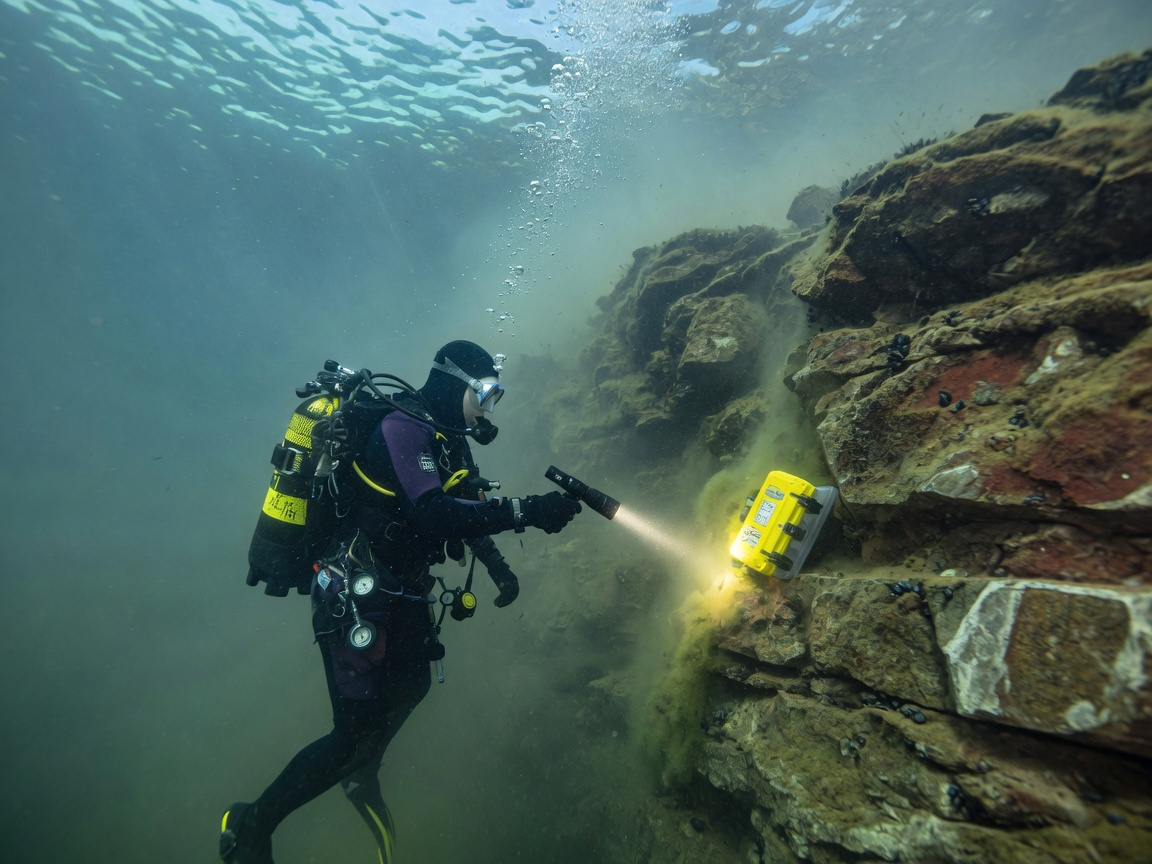
Yes, there are geocaches underwater — more of them than most cachers realise. SCUBA-required caches appear at freshwater dive sites, flooded quarries, coastal reefs, and dedicated dive parks. They’re rated T5 by definition. The container sits at a depth that makes free-diving impractical, so you need a dive certification, a buddy, and the right kit. And you’re searching for a waterproof container in often-murky water, with limited visibility, under time pressure from your air supply. It’s geocaching at its most unforgiving. The container itself must be waterproofed to a standard that withstands constant, long-term submersion — hiders use sealed housings and layered inner protection to keep the logbook dry.
Cave and Spelunking Caches
Some hiders take their containers underground into cave systems that require crawling through tight passages, navigating in complete darkness, and sometimes using technical caving equipment. These caches demand cave safety knowledge, redundant lighting, and comfort with genuinely disorienting environments. They’re among the most atmospheric hides in the hobby — and among the most dangerous to attempt without proper preparation and experience.
Extreme Multi-Stage Caches
Some multi-stage caches layer multiple challenges — a puzzle to solve, a climb to execute, then a precision search to complete. Each stage feeds the next, and each can require a different piece of gear or a different skill set. Completing them often takes multiple visits across multiple days, and sometimes multiple seasons where weather closes certain routes between attempts. These hides are rare, but the cachers who’ve completed one tend to describe them as the most satisfying logs of their geocaching careers.
Are There Famous Geocaches Known for Being Nearly Impossible to Find?
The geocaching community has its own legends — caches that have developed almost mythological status because of how few people have ever found them.
Project A.P.E. caches are the most famous. In 2001, 14 of these special cache containers were hidden at locations worldwide as a promotion tied to the Planet of the Apes film. Over the following years, most were archived as containers degraded, land access changed, or local geocaching communities couldn’t sustain maintenance. The tiny number that remain active today are considered among the rarest finds in all of geocaching. Their find counts are extraordinarily low by any standard, and cachers sometimes travel internationally for a single chance to log one. Finding an active A.P.E. cache is, for many experienced cachers, a once-in-a-lifetime achievement.
High-altitude summit caches have also earned legendary status within specific regional communities. Some hiders have fixed containers at the tops of technical peaks accessible only to experienced mountaineers during narrow seasonal weather windows. A few have gone two or more years between consecutive finds.
Perma-muggled urban hides represent a different kind of legendary difficulty. Some city-based caches have been stolen or displaced so many times that only locals who visit the spot frequently — and know the exact micro-location — can reliably make a find. These require patience and multiple visits before conditions align in your favour.
What Is a D5/T5 Geocache, and Why Is It the Top of the Scale?
A D5/T5 is the maximum rating on both axes. It signals that finding the cache is genuinely hard even once you’ve reached the right spot — and that getting there requires specialist equipment and real skill. According to geocaching.com’s guidelines, T5 terrain means “specialized equipment such as a boat, SCUBA gear, or rock climbing equipment is required.” D5 difficulty means “this cache will require specialized skills or knowledge, or a long and careful search.”
A true D5/T5 combines both: you might need to rock-climb to a specific ledge, then search a large surface area for a nano-sized container hidden among dozens of possible locations. Both the journey and the find push you to your limits simultaneously.
The “Fizzy Challenge” — named for a community member who proposed seeking a cache at every combination of difficulty and terrain rating — treats the D5/T5 square as the capstone achievement on the full 81-combination grid. The rating scale has 9 possible values on each axis (1, 1.5, 2, 2.5, 3, 3.5, 4, 4.5, 5), giving 81 unique D/T pairings in total. Many dedicated cachers spend years working toward a complete Fizzy grid. The D5/T5 square is almost always the last one filled.
Hiders who place D5/T5 caches carry a real responsibility. Getting the rating right — not overstating or understating the challenge — directly protects future seekers who make decisions about gear and safety based on those numbers. Understanding how to rate geocache difficulty accurately from a hider’s perspective is something every serious cacher should study, especially before placing anything at T4 or above.
What Makes Puzzle and Mystery Caches So Difficult?
Mystery caches don’t show their real coordinates on the listing page. The posted coordinates are typically placeholder numbers — often pointing to a nearby landmark, a local landmark, or sometimes a location in a completely different country. Only seekers who solve the puzzle correctly get the actual cache location.
At the easy end, puzzle caches use simple substitution ciphers or straightforward maths. At the extreme end, hiders have deployed military-grade cryptography, steganography (hiding data invisibly inside image files), multi-language anagrams, references to obscure academic papers, and layered cipher systems where solving stage one only reveals the starting point for stage two. Some of the most notorious puzzle caches require specialist knowledge in chemistry, astronomy, number theory, or historical linguistics to even begin.
Geocachers who specialise in puzzle caches describe some of the most challenging examples as requiring months of active work, with the community often collaborating carefully in forums — sharing partial insights without spoiling the full solution path for others. The techniques for cracking complex mystery caches have grown into a substantial discipline of their own within the community, complete with dedicated software tools and solving frameworks.
The most challenging examples in the community have logged only a handful of finds after multiple years of being listed. Some hiders respond to hint requests with deliberately cryptic non-answers. For these caches, solving the puzzle is the achievement — before anyone has touched a hiking boot.
How Do You Prepare to Attempt One of the World’s Hardest Geocaches?
Attempting a D5/T5 or an extreme puzzle cache is a completely different undertaking from a typical weekend caching session. Here’s how experienced cachers approach it:
- Read every log from the beginning. Previous finders often leave coded hints or describe terrain conditions and seasonal factors in their logs. The first few entries after a cache was published frequently contain the most useful context about the hide’s character.
- Research the terrain independently. For climbing or cave caches, look up the specific location on outdoor databases — know the technical grade, the approach route, and gear requirements before you commit. Don’t rely solely on the cache listing.
- Connect with the local community. Many high-difficulty caches have active follower groups. A respectful, spoiler-free conversation with someone who has logged it before can reveal important context that isn’t visible in the public listing.
- Solve puzzles completely at home before travelling. For mystery caches, never travel to the listed placeholder coordinates hoping to improvise on-site. Solve the puzzle fully at home, verify your answer against any available checking tools, then go.
- Over-prepare on gear. Cachers consistently underestimate equipment needs for T4+ terrain. Err heavily on the side of over-preparation — the consequences of arriving under-equipped at extreme terrain are serious.
- Build in room for failure. The world’s hardest caches are designed to beat you. Plan for multiple attempts. Many of the most celebrated finds in geocaching took the seeker three or four visits spread across months.
What Gear Do You Need for the Hardest Geocaches?
The equipment list for extreme geocaching depends entirely on the cache type. Here’s a reference breakdown of the main categories:
| Cache Type | Essential Gear | Core Skills Required |
|---|---|---|
| Technical rock climbing (T5) | Harness, rope, helmet, belay device, climbing protection | Lead climbing, anchor building |
| SCUBA / underwater (T5) | BCD, regulator, wetsuit or drysuit, dive computer, tank | Open water certification minimum |
| Cave / spelunking | Redundant headlamps, rope, appropriate clothing, first aid | Basic caving, underground navigation |
| High-altitude summit | Crampons, ice axe, layering system, navigation tools | Mountaineering, altitude management |
| Extreme puzzle / mystery | Cipher tools, decryption software, research database access | Cryptography, logic, lateral thinking |
For the physical search phase at any extreme cache, a reliable GPS unit or a well-mounted phone keeps navigation accessible while your hands are busy. When you’re working a cliff section with a harness on, fumbling through pockets for a device breaks focus at exactly the wrong moment. Thinking through your navigation setup before you go — including how you’ll access your device mid-climb or mid-dive — is as important as any other gear decision.

Frequently Asked Questions About the World’s Hardest Geocaches
What is the rarest geocache type in the world?
Project A.P.E. caches are widely considered the rarest active geocaches in existence. Originally, 14 were hidden globally in 2001. The tiny number that remain active today have extremely low find counts, and their maintenance depends on dedicated local geocaching communities. Outside of A.P.E. caches, certain D5/T5 hides in genuinely remote or technically demanding locations have logged no finds at all during calendar years when access conditions didn’t allow it.
Do you need special qualifications to attempt a D5/T5 cache?
Geocaching.com doesn’t require formal qualifications to log any cache. But the practical reality is that T5 caches requiring SCUBA or technical climbing genuinely demand the corresponding real-world training and experience. Attempting them without it puts you and any rescue personnel at serious risk. The terrain rating is not a suggestion — treat it as the safety warning it is.
How long does it take to solve an extreme puzzle cache?
Simple puzzle caches might take an afternoon. Genuinely extreme mystery caches — those using advanced cryptography or multi-layer cipher systems — have kept dedicated solvers occupied for months or years. Community forums sometimes carry thread histories spanning several years of collective puzzle-solving effort on a single cache, with participants carefully sharing partial insights without spoiling the full solution for others.
Is it legal to hide a geocache on a cliff face or underwater?
Legality depends entirely on land ownership and local regulations, which vary significantly by country and jurisdiction. Cliff faces, underwater sites, and cave systems frequently fall under conservation protections, park authority rules, or private land restrictions. Reviewing the guidance on where you can legally place a geocache is essential before placing anything in an unusual or environmentally sensitive location — regardless of how creative the hide might be.
What’s the most common mistake cachers make when attempting a hard cache?
Underestimating the difficulty. Cachers regularly arrive at T4 and T5 terrain expecting conditions they can manage on the day, only to find the technical demands or environmental factors are beyond what they brought or trained for. The second most common mistake is attempting a mystery cache without fully solving it — arriving at the posted placeholder coordinates and searching for an hour before realising the actual cache is somewhere else entirely.
Are there geocaching achievements or challenges linked to finding hard caches?
Yes. The Fizzy Challenge — completing finds across all 81 difficulty/terrain combinations on the rating grid — is the best-known achievement tied to extreme caches, with the D5/T5 square functioning as the capstone for most who attempt it. Community-run challenge caches also exist that require finding a set number of D5 or T5 hides as prerequisites. For many serious cachers, filling the full Fizzy grid is a multi-year project that defines their geocaching ambitions.
Can beginners work toward finding extreme caches?
Absolutely — but the path is a long one and should be taken in stages. Start with D2/T2 and D3/T3 caches to build field craft and terrain confidence. Study the rating system from both a seeker’s and hider’s perspective. Attempt puzzle caches regularly to build cryptographic skills. Consider rock climbing or diving courses if those cache types appeal to you. The most experienced extreme cachers almost universally describe years of progressive skill-building before they felt genuinely ready for the top of the scale.
The Bottom Line: What Really Is the Hardest Geocache to Find?
There’s no single “hardest geocache in the world” — the answer depends on whether you measure difficulty by find count, technical requirements, puzzle complexity, or physical danger. The D5/T5 category represents geocaching’s outer boundary, and within it you’ll find hides that demand skills most people spend careers developing outside the hobby.
The surviving Project A.P.E. caches hold a special place as the most coveted finds by rarity. But the most personally difficult cache you’ll ever attempt will almost certainly be the one that exposes your specific weaknesses — whether that’s cryptographic puzzles, vertical terrain, or searching a coral reef at depth with a limited air supply.
The path toward extreme geocaching is a gradual one. Build field skills systematically. Study the difficulty rating framework from a hider’s perspective — understanding why a cache is rated what it is makes you a far sharper seeker. Climb the scale one half-point at a time. The world’s hardest caches aren’t going anywhere. They’ll wait for you to be ready.